The Reality: You will still receive an IMU bill. Solar panels only generate power when the sun shines. At night or on cloudy days, you rely entirely on IMU’s grid. When you produce excess energy, IMU buys it back at our current rate, but you will still pay for the power you pull from the grid and standard service charges.
Myths vs. Realities of Residential Solar Power
Many homeowners are exploring personal residential solar. While the price of panels has fallen 70% in the last decade, navigating the market can be tricky. To help you evaluate the investment, let’s separate fact from fiction.
Myth 1: "I will never have an electric bill again."
Myth 2: "If the power goes out, my solar panels will keep my lights on."
The Reality: Unless you have a specialized battery backup system, your panels will shut off automatically during a blackout. This is a critical safety feature that prevents your system from sending electricity back into the lines, protecting IMU crews while they work to restore power.
Myth 3: "Solar panels don’t work in Iowa winters."
The Reality: Solar panels actually run more efficiently in cold weather than in extreme heat. While heavy snow can temporarily block sunlight, Iowa gets ample year-round sun, and snow typically slides off angled panels quickly.
Myth 4: "Cost savings are the best reason to install solar."
The Reality: Rooftop solar is a long-term commitment, not a rapid financial return. With significant upfront installation costs, it typically takes 10 to 20 years to recoup your investment.
The Real Benefits: It is best to view residential solar primarily as a long-term commitment to environmental sustainability rather than a rapid investment return. It is a powerful environmental choice—the average home system cuts over 11,000 pounds of CO2 emissions annually.
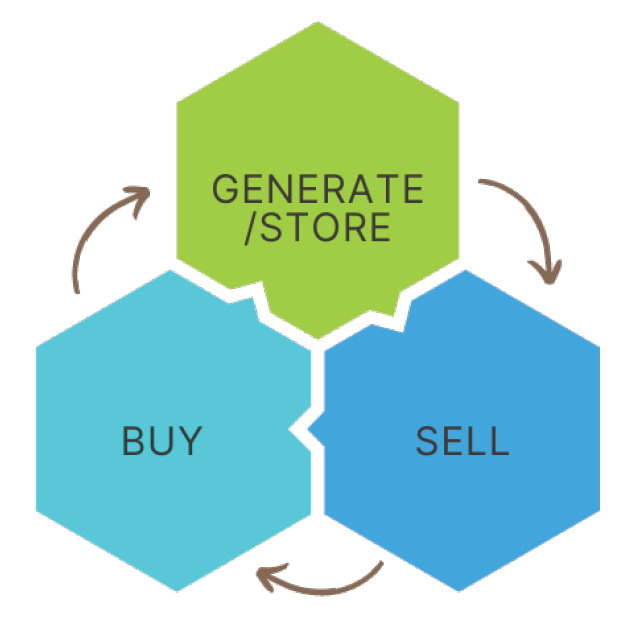
Your home uses power that’s directly generated in real time from your panels when they’re producing. With a battery wall, you can store power as well.
You sell excess energy produced but not stored back to IMU, which is returned to the grid and made available for use.
Residents purchase IMU’s power when their solar panels aren’t producing enough to cover their needs.
Still have questions?
Contact IMU!
Before signing a contract or paying a deposit, reach out to IMU. Many third-party installers make inflated generation promises that don’t account for your specific roof pitch, shading, or local utility policies. Our team will help you review the fine print so you can make the right choice for your home.
CUSTOMER REQUEST
Submit the Application for Interconnection (available at the IMU website or the office) with the processing fee.

IMU REVIEW
IMU notifies you of needed equipment or upgrades; the Customer-Owned Generation Facilities Interconnection Agreement is signed.

PERMITTING & CONSTRUCTION
Your contractor obtains all required permits and completes construction, then submits a Certificate of Completion to IMU.

COMPLETION & ACTIVATION
IMU installs the required bi-directional and production meters, and you begin generating solar power at your residence.

Previous: Quick Summer Utility Savers
